
Assets may avoid probate when they already have a valid transfer path, such as trust ownership, a beneficiary designation, or certain joint ownership arrangements.
Assets owned only in one person’s name, with no beneficiary and no trust, are more likely to create probate risk.
A probate avoidance review checks each asset one by one instead of guessing.
Start at the AMO LAW homepage, learn about a probate avoidance attorney in Costa Mesa, see the local Costa Mesa page, or read the general Wikipedia overview of estate planning.
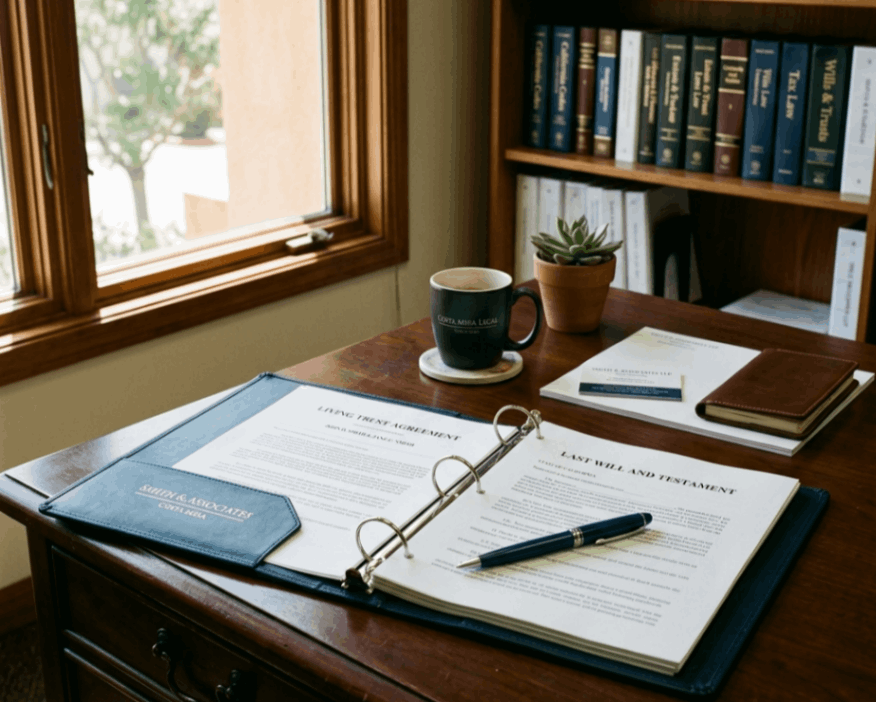
If you are reading this, probate is probably not an abstract legal word. It may feel like a bill, a delay, a family argument, or a future mess you want to prevent.
In our experience, that is the right instinct. Estate planning should make life easier for the people you love, not leave them with a boss battle in probate court.
What we’ve seen is that families feel better when legal ideas are explained in normal words. So let’s make this useful, clear, and human.
| Asset Type | May Avoid Probate If | Planning Watch-Out |
|---|---|---|
| Home | Properly titled in trust or valid transfer path exists | Trust funding must actually happen |
| Life insurance | Current beneficiary is named | Old beneficiaries can cause problems |
| Retirement account | Valid beneficiary is named | Coordinate with tax and family goals |
| Bank account | POD/TOD or trust planning applies | Forms must match the full plan |
| Collectibles | Clear instructions and ownership path exist | Emotional items can create conflict |
Why Asset Ownership Matters
Probate is often less about what you own and more about how you own it. The title, beneficiary form, and trust funding can change everything.
In our experience, families are surprised that two accounts at the same bank can transfer differently. One may have a beneficiary, while the other may not.
What we’ve seen is that people think the will controls everything. In real life, beneficiary forms and account ownership can speak first.
That is why asset review is a core part of probate avoidance. You need a map, not a pile of assumptions.
Probate is a court process for transferring certain assets after someone dies. A probate avoidance plan tries to create a clearer path before court is needed.
Assets Often Reviewed for Probate Risk
A home is usually one of the biggest assets to review. If California real estate is owned only in one person’s name, it may create probate risk.
Bank accounts, investment accounts, vehicles, business interests, and valuable personal property should also be reviewed. Each one needs a transfer path.
Life insurance and retirement accounts may avoid probate if they have current, valid beneficiaries. But old forms can create real problems.
From our experience, beneficiary designations are like old saved game files. If they are outdated, the ending may not match the life you are living now.
Families usually do not want perfection. They want a plan that tells them who is in charge, where important assets go, and what to do next.
How Trust Ownership Can Help
A revocable living trust can help assets avoid probate when the assets are actually transferred into the trust. This is called funding the trust.
A trust document without funding can be like having a great treasure map but leaving the treasure in a different castle. It looks good, but it may not solve the problem.
What we’ve seen is that families often create a trust and then forget to update titles after buying a new home or opening a new account.
In our experience, the trust funding review is where a lot of probate prevention really happens.
Beneficiary Designations Can Help Too
Beneficiary designations can help certain assets avoid probate. This may include life insurance, retirement accounts, and some financial accounts.
But beneficiary forms need to be current. A divorce, death, new child, new partner, or family conflict can make an old form dangerous.
What we’ve seen is that people set these forms once and never look again. That is risky because life keeps moving.
A good plan reviews beneficiary forms with the trust, will, and overall family goals. The pieces should work together.
Legacy planning can include a home, accounts, pets, collections, digital assets, family stories, and the people who need care.
Personal Property Still Needs a Plan
Not every probate fight is about money. Sometimes families argue over jewelry, collectibles, tools, art, photos, pets, or fandom items with emotional value.
In our experience, personal property can be the spark that lights the family conflict fire. People attach meaning to objects.
A clear plan can name who receives what, who decides, and how items should be handled if people disagree.
That kind of planning is More Than Just Money. It protects memories, stories, and relationships.
Start With an Asset Walkthrough
One way to answer “what assets can avoid probate?” is to walk through your actual assets one by one. Generic answers only go so far.
A Costa Mesa family with a home, business, kids, and digital assets needs a different review than a single person renting an apartment with a retirement account.
What we’ve seen is that people feel calmer once the asset list is clear. Mystery is the enemy of good planning.
A Life & Legacy Plan turns that list into a strategy your loved ones can actually use.
A probate plan should be clear enough for your loved ones to understand and use when life gets hard.
How to Make This Less Overwhelming
Start with one drawer, one account, or one question. You do not need to solve your whole estate plan in one evening.
In our experience, the first win is simply knowing what you own and who would be allowed to act if something happened.
What we’ve seen is that people avoid planning because they think it has to be perfect. It does not. It has to begin, then improve with guidance.
A good estate plan is like a good quest log. It tells your people where to go, what matters, and who has the authority to move the story forward.
What Families Usually Miss
Families often miss the little details: an old beneficiary form, a house outside the trust, a password no one can find, or a personal item no one knows how to divide.
Those small gaps can create big stress later. They can also turn a simple transfer into a court process or a family disagreement.
In our experience, planning conversations should be practical. We talk about homes, kids, partners, pets, collections, accounts, family personalities, and real-life what-ifs.
That is what makes probate avoidance personal. It is not just law. It is life with paperwork, people, and feelings attached.
How to Make This Less Overwhelming
Start with one drawer, one account, or one question. You do not need to solve your whole estate plan in one evening.
In our experience, the first win is simply knowing what you own and who would be allowed to act if something happened.
What we’ve seen is that people avoid planning because they think it has to be perfect. It does not. It has to begin, then improve with guidance.
A good estate plan is like a good quest log. It tells your people where to go, what matters, and who has the authority to move the story forward.
What Families Usually Miss
Families often miss the little details: an old beneficiary form, a house outside the trust, a password no one can find, or a personal item no one knows how to divide.
Those small gaps can create big stress later. They can also turn a simple transfer into a court process or a family disagreement.
In our experience, planning conversations should be practical. We talk about homes, kids, partners, pets, collections, accounts, family personalities, and real-life what-ifs.
That is what makes probate avoidance personal. It is not just law. It is life with paperwork, people, and feelings attached.
How to Make This Less Overwhelming
Start with one drawer, one account, or one question. You do not need to solve your whole estate plan in one evening.
In our experience, the first win is simply knowing what you own and who would be allowed to act if something happened.
What we’ve seen is that people avoid planning because they think it has to be perfect. It does not. It has to begin, then improve with guidance.
A good estate plan is like a good quest log. It tells your people where to go, what matters, and who has the authority to move the story forward.
What Families Usually Miss
Families often miss the little details: an old beneficiary form, a house outside the trust, a password no one can find, or a personal item no one knows how to divide.
Those small gaps can create big stress later. They can also turn a simple transfer into a court process or a family disagreement.
In our experience, planning conversations should be practical. We talk about homes, kids, partners, pets, collections, accounts, family personalities, and real-life what-ifs.
That is what makes probate avoidance personal. It is not just law. It is life with paperwork, people, and feelings attached.
How to Make This Less Overwhelming
Start with one drawer, one account, or one question. You do not need to solve your whole estate plan in one evening.
In our experience, the first win is simply knowing what you own and who would be allowed to act if something happened.
What we’ve seen is that people avoid planning because they think it has to be perfect. It does not. It has to begin, then improve with guidance.
A good estate plan is like a good quest log. It tells your people where to go, what matters, and who has the authority to move the story forward.
What Families Usually Miss
Families often miss the little details: an old beneficiary form, a house outside the trust, a password no one can find, or a personal item no one knows how to divide.
Those small gaps can create big stress later. They can also turn a simple transfer into a court process or a family disagreement.
In our experience, planning conversations should be practical. We talk about homes, kids, partners, pets, collections, accounts, family personalities, and real-life what-ifs.
That is what makes probate avoidance personal. It is not just law. It is life with paperwork, people, and feelings attached.
How to Make This Less Overwhelming
Start with one drawer, one account, or one question. You do not need to solve your whole estate plan in one evening.
In our experience, the first win is simply knowing what you own and who would be allowed to act if something happened.
What we’ve seen is that people avoid planning because they think it has to be perfect. It does not. It has to begin, then improve with guidance.
A good estate plan is like a good quest log. It tells your people where to go, what matters, and who has the authority to move the story forward.
What Families Usually Miss
Families often miss the little details: an old beneficiary form, a house outside the trust, a password no one can find, or a personal item no one knows how to divide.
Those small gaps can create big stress later. They can also turn a simple transfer into a court process or a family disagreement.
In our experience, planning conversations should be practical. We talk about homes, kids, partners, pets, collections, accounts, family personalities, and real-life what-ifs.
That is what makes probate avoidance personal. It is not just law. It is life with paperwork, people, and feelings attached.
Questions Families Ask
Is probate always required in California?
No. Some assets can transfer through a trust, beneficiary designation, joint ownership, or a simplified procedure if the estate qualifies. The right answer depends on the asset and the facts.
Does a living trust avoid probate automatically?
Not automatically. A living trust can help, but the right assets need to be connected to the trust. That funding step is where many plans succeed or fall short.
Should I wait until I own more before planning?
In our experience, waiting is rarely the easiest path. If you own a home, have loved ones, have digital assets, or want privacy, it is worth learning your options now.
AMO LAW helps California families, founders, and fans create estate plans that are warm, clear, and built for real life.
A Legacy Planning Session can help you understand your probate risk and choose the next step with confidence.
This article is general information for California readers and is not legal advice. Probate and estate planning rules depend on your assets, family, goals, and current law. Talk with an attorney about your specific situation.