
Processing...
Plan for the people you love
A clear estate plan can help you make decisions about your property, your family, and who may act for you when circumstances change.
Quick answer
If you are looking for an estate planning attorney in Costa Mesa, CA, AMO LAW helps individuals and families consider wills, trusts, probate support, powers of attorney, healthcare documents, guardianship planning, and related choices. No two families are the same, so the planning conversation should reflect your situation, assets, and goals.
Planning your estate can feel like a lot to take on. There are legal details, big decisions, and questions about which options may fit your family.
In our experience, people understand the process more easily when each document is connected to a real decision: who receives property, who can make financial or healthcare decisions, and what instructions your family may need later.
Individuals and families who want to organize property, name decision-makers, plan for incapacity, or document wishes for children and other dependents.
Discuss family and asset questions, review planning tools, prepare documents that fit the decisions made, and follow through on funding and beneficiary steps.
It can give you and the people you choose clearer instructions and authority. The documents and account ownership should be reviewed together.
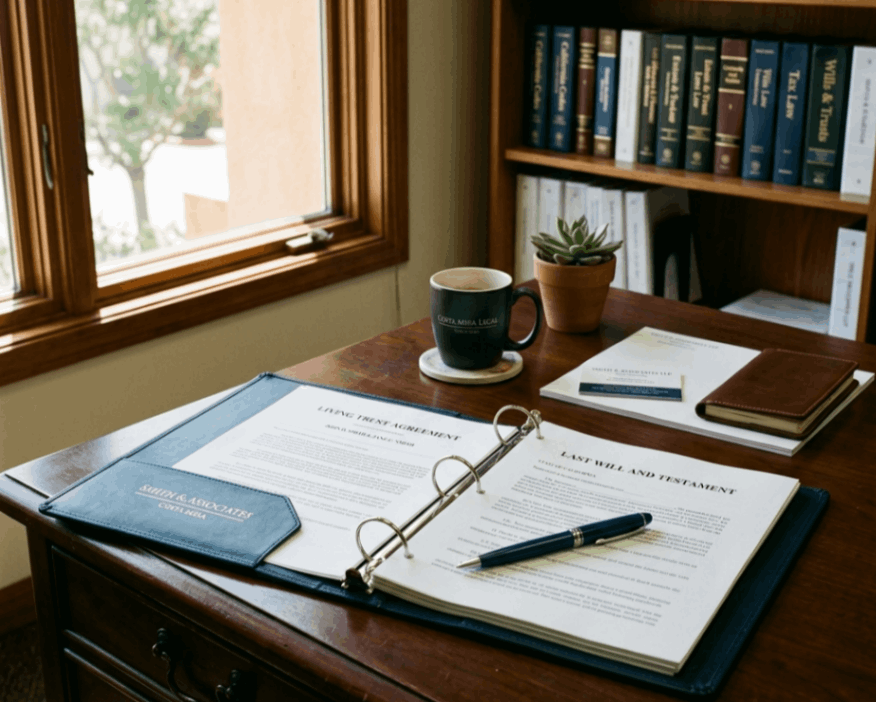

Choosing an estate planning attorney is a personal decision. You want someone who listens, explains the choices clearly, and takes time to understand what matters most to you.
AMO LAW helps clients consider plans that fit their lives rather than a one-size approach. Whether you are considering a living trust, planning for children, reviewing asset ownership, or preparing for probate-related work, the goal is to make the next steps easier to understand.
AMO LAW has offices in Costa Mesa and Corona and offers consultations in person or virtually for clients throughout California, subject to the facts and scope of the legal matter.
California rules affect wills, trusts, powers of attorney, and probate. California Courts explains common wills, trusts, and life-planning documents in its public self-help guide.
A will can record your wishes, name an executor, and nominate guardians. We discuss how a will may fit with your family, property, and other planning documents.
A living trust can hold and manage assets during life and after death. Assets properly titled or funded into a trust may generally avoid probate, but funding and account ownership still matter.
A special needs trust may help a family plan for a child or another loved one with a disability while considering public benefits, trustee responsibilities, and long-term support. The appropriate structure depends on who owns the funds and the beneficiary’s circumstances.
These documents can name people to make financial or healthcare decisions if you cannot. The scope and timing depend on the document and the circumstances.
Families may need help understanding trust terms, asset records, beneficiary communication, debts, taxes, distributions, and the responsibilities of a successor trustee after a death.
Parents may discuss guardianship nominations, financial instructions, emergency information, and how assets should be managed for a child or dependent.
Estate planning is not only about what happens later. It can also address healthcare decisions, financial management, and who may act for you if something unexpected happens.
Without a current plan, families may face added uncertainty about who can act, how property is handled, and what process applies. A will may still go through probate, while a properly funded trust may help some assets avoid probate. California Courts explains that a person’s estate may need probate even when there is a will.
Planning does not remove every future question. It can give your family a clearer starting point and help you make decisions while you have the capacity to do so.
| Planning question | Document or review to discuss | Why it matters |
|---|---|---|
| Who receives property? | Will, trust, beneficiary designations, and ownership records. | Different assets may transfer under different rules. |
| Who acts if I cannot? | Financial power of attorney, healthcare directive, and successor trustee instructions. | Your family may need authority before a death or court process. |
| Who cares for a minor child? | Guardian nomination, trust instructions, and emergency information. | A court may still need to act, but your written preferences provide important guidance. |
| What happens after death? | Trust funding review, pour-over will, beneficiary plan, and administration instructions. | Follow-through can affect how property is managed and transferred. |
Many families start with one question and discover that another part of the plan needs attention. Relevant planning conversations may include:
Compare the roles of wills, living trusts, and related documents.
Consider guardianship preferences, emergency instructions, and financial support.
Discuss trust terms, ownership records, successor trustees, and later administration.
Review how ownership, liability, business interests, and family goals may fit together.
The California Courts guide to property after someone dies explains that a will or trust does not necessarily mean every asset avoids probate. Ownership and funding still matter.
Trying to handle estate planning alone can lead to missed details or documents that do not fit your circumstances. Laws and family situations change, so a plan may need review after marriage, divorce, a birth or death, a move, a home purchase, a business change, or a major financial change.
AMO LAW explains planning choices in plain language so you can decide what may fit your family.
AMO LAW serves individuals and families in Costa Mesa and nearby Orange County communities. Offices are in Costa Mesa and Corona, and consultations are available in person or virtually.
The State Bar of California Attorney Search is another public resource for checking attorney profiles and certified-specialist information.
These answers are general information. The right planning depends on your facts and the law that applies.
An estate planning attorney may help prepare wills, trusts, powers of attorney, healthcare documents, beneficiary instructions, and related planning documents. The right documents depend on your family, assets, and goals.
A will generally takes effect at death and can name an executor and nominate guardians for minor children. A trust can hold and manage assets during life and after death. Assets properly titled or funded into a trust may generally avoid probate, but many families discuss both.
Review your plan after marriage, divorce, a birth or death, a move, a home purchase, a business change, a major financial change, or a change in the people you want to make decisions or receive property.
State law may determine how property is handled, who may serve in certain roles, and who may inherit. That result may not match your wishes and can create additional work for your family.
Yes. Financial powers of attorney and healthcare documents can name people to act or make decisions if you cannot. The scope and timing of authority depend on the document and the circumstances.
A special needs trust may hold funds for a person with a disability while coordinating with public-benefit and long-term support questions. The right structure depends on who owns the funds, the beneficiary’s circumstances, and current law.
Assets properly titled, transferred, or funded into a living trust may generally avoid probate. A trust does not automatically control every asset, so ownership records and beneficiary designations should be reviewed.