
Processing...
Wills, trusts, and legacy planning
A will and a trust serve different purposes. Many California families discuss both as part of a plan for property, decision-making, children, and the people they love.
Quick answer
If you are looking for a wills and trusts attorney in Costa Mesa, AMO LAW helps individuals and families consider wills, revocable living trusts, powers of attorney, healthcare documents, guardianship planning, trust funding, and later administration. The right plan depends on your family, assets, goals, and the law that applies.
A Last Will and Testament can record your wishes for property, name an executor, and nominate guardians for minor children. It generally takes effect at death and may be reviewed through probate.
A will is an important document, but it does not control every asset. Accounts with beneficiary designations, jointly owned property, and assets held in a trust may transfer under different rules.
A will can describe who should inherit property that is controlled by the will, subject to the legal process and circumstances that apply.
A will can nominate an executor to help identify property, address debts, and distribute assets through the applicable process.
A will can nominate a guardian. A court may still need to act, but your written preference gives the court important information.
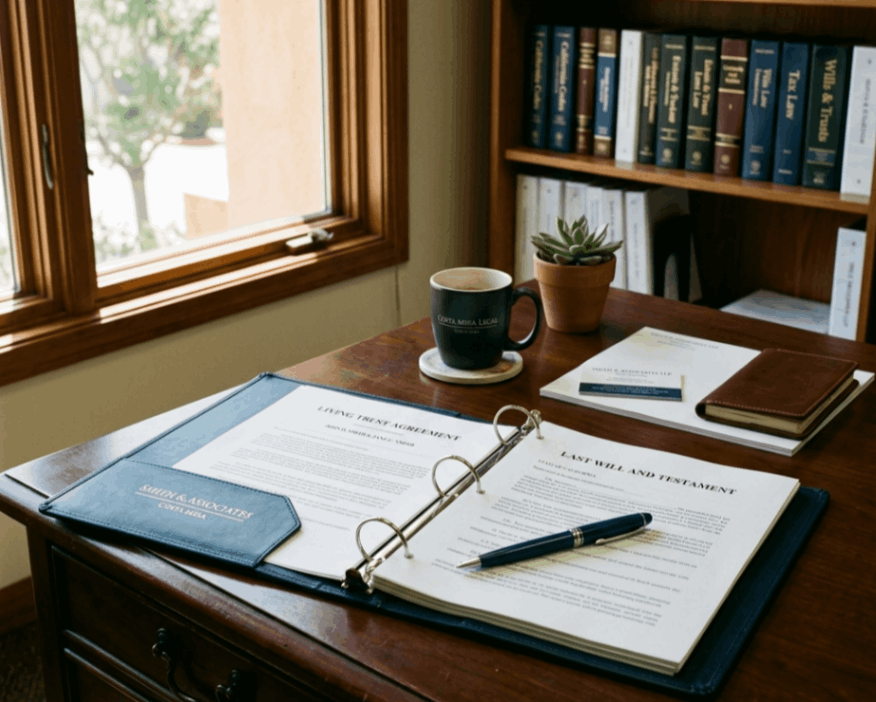

There is a lot of misinformation about trusts, what they do, what they cost, and whether every family needs one. A trust is a legal arrangement that can describe how assets are held and managed during life and after death.
A revocable living trust may allow you to remain in control while you are able to act, name a successor trustee, and provide instructions for later management. Assets properly titled or funded into a trust may generally avoid probate, depending on the asset and circumstances.
May help organize management during life and after death. You can generally change or revoke it while you have capacity, subject to the trust terms and applicable law.
Ownership records, deeds, account titles, and beneficiary designations may need review so the assets intended to be governed by the trust are aligned with it.
A successor trustee may manage trust property if you cannot and may help administer the trust after death, according to the trust terms.
Ask which assets should be reviewed, what steps are needed to fund the trust, who will handle each step, and what happens if an asset remains outside the trust.
California Courts explains common wills, trusts, and life-planning documents in its public self-help guide.
| Question | Will | Revocable living trust |
|---|---|---|
| When does it operate? | Generally at death. | Can operate during life and after death, once created and funded as appropriate. |
| What can it address? | Property instructions, executor nomination, and guardian nomination for minor children. | Asset management, successor trustee instructions, and distribution terms. |
| Probate | Property controlled by a will may be reviewed through probate. | Assets properly titled or funded into a trust may generally avoid probate. |
| Privacy | A probate file may be public. | Trust terms are generally not filed in the same way as a probate case, though other records and proceedings may still apply. |
| Funding | Does not hold assets during life. | Requires appropriate ownership and funding steps for assets intended to be governed by the trust. |
California Courts describes probate as the court process for handling property after someone dies. A will or trust does not automatically determine how every asset transfers.
For parents, a will naming guardians is just the beginning. A child-focused plan can also address financial support, emergency information, trustee instructions, and how property may be managed as a child grows.
A practical conversation about caregiver preferences, legal documents, emergency contacts, and instructions that may help the people you trust respond.
Discuss how assets may be held and managed for a child instead of assuming a child should receive everything at once.
Organize information about routines, school, healthcare, contacts, and the people who should know what to do.
No plan can control every court decision or future circumstance. Written preferences can still give a court and caregivers important information about your wishes.
Estate planning is also a chance to discuss the values, stories, and practical guidance you want your family to carry forward. Financial assets are only one part of what people leave behind.
AMO LAW’s Life and Legacy Planning process considers your family relationships, important decisions, property, business interests, digital information, and the people who may need to act for you.
A guided conversation can help capture stories, values, lessons, and family context that may otherwise be lost.
The plan can address the parts of your life that do not fit a standard form, including blended families, chosen family, dependents, and complicated relationships.
Life changes, and your plan may need review after marriage, divorce, a birth or death, a move, a home purchase, a business change, or a major financial change.
AMO LAW includes a review at three years. A more frequent review may be appropriate when your circumstances change.
Online forms can appear simple, but a generic document may not address California requirements, the way your assets are owned, or the details of your family.
In our experience, the difficult questions are often the ones a form cannot ask: who understands what you own, which asset would cause the most conflict, who should step in during an emergency, and what your family will need after a loss.
Understand what each document is intended to do and what decisions remain yours.
Discuss signing, trust funding, account ownership, document storage, and future updates.
An After-Loss Support Meeting can help a successor trustee understand what needs to happen, in what order, and when additional professionals may be needed.
Estate planning does not remove every future question. It can give your family a clearer starting point and a person to call when the documents do not answer the practical question in front of them.
AMO LAW helps individuals and families in Costa Mesa and nearby Orange County communities discuss wills, trusts, and related estate planning options. The offices are in Costa Mesa and Corona, and consultations are available in person or virtually for clients throughout California, subject to the facts and scope of the legal matter.
Whether you are taking your first step or updating existing documents, the process can begin with a conversation about what matters most to you.
Before the conversation, gather current documents, a general list of property and accounts, names of possible decision-makers, and questions about your family’s needs.
The State Bar of California Attorney Search is a public resource for attorney information.
This page provides general information, not legal advice, and does not create an attorney-client relationship. Laws and procedures can change, and the right planning depends on your specific circumstances.
These answers are general information. The right planning depends on your facts and the law that applies.
A will generally takes effect at death and can name an executor and nominate guardians for minor children. A trust can hold and manage assets during life and after death. Assets properly titled or funded into a trust may generally avoid probate, depending on the asset and circumstances. Many families discuss both.
Many people use a pour-over will with a living trust. A will can nominate guardians for minor children and may direct certain assets that were not transferred into the trust. The right documents depend on your plan.
A revocable living trust can describe how assets are managed during life and after death. You may generally remain in control while serving as trustee, and a successor trustee may act if you cannot. Trust funding and ownership records matter.
Planning documents may address guardian nominations, financial support, trustee instructions, emergency information, and how property is managed for children. No document can control every court decision or future circumstance.
Review your plan after marriage, divorce, a birth or death, a move, a home purchase, a business change, a major financial change, or a change in the people you want to make decisions or receive property.